

Top Things to See and Do in Paris: The City Beneath the Postcard
Paris is extraordinary and its best experiences cost next to nothing. From the Musée d'Orsay to the Luxembourg Gardens to a perfect afternoon in the Marais, here's how to experience the real city.
Paris is written about more than any other city barring New York, and most of that writing is either rapturously romantic or exhaustingly practical. The honest truth is that Paris is written about for very good reason, the postcard version of it is quite real, and the version of the city that most American visitors experience; Eiffel Tower, Louvre, Notre-Dame, repeat - represents about 15% of what makes it really great. The things to do in Paris that produce the strongest memories are disproportionately free or cheap. The right neighborhoods to walk through, the right market to find on a Sunday morning, the museum that holds the world's greatest Impressionist collection and doesn't require six hours to feel satisfied. This guide is for first-time visitors who want to use their time well and for returning visitors who want to find what they missed.
Museums: The Paris Museums Guide That Starts With the Right Question
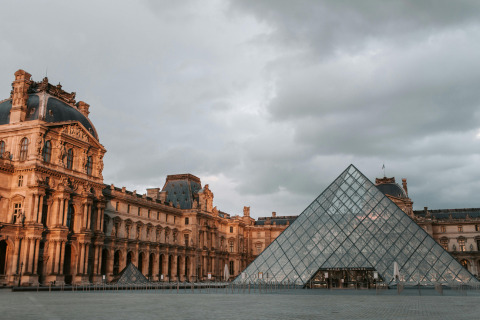
The Louvre is the largest museum in the world and holds some of the most significant art objects in human history. It also contains 380,000 items across 782,000 square feet, and most visitors leave feeling vaguely guilty about how little they saw properly. A Paris museums guide that helps visitors use their time well starts with a counter-intuitive recommendation: go to the Musée d'Orsay first. Housed in a converted 1900 railway station on the Left Bank, the Orsay holds the world's greatest collection of Impressionist and Post-Impressionist paintings (Monet, Renoir, Degas, Van Gogh, Cézanne, Seurat) and it can be done properly in 3-4 hours rather than the half-day the Louvre demands. For the Louvre, focus your visit: the Denon Wing holds the Venus de Milo, Winged Victory of Samothrace, and the Mona Lisa, three world-defining objects in a single wing. The Mona Lisa room is always crowded; arrive at opening or skip it entirely and spend that time in the largely uncrowded antiquity galleries. The Centre Pompidou (modern and contemporary art, free on the first Sunday of each month) and the Musée Rodin (Rodin's studio and garden, $14) round out the essential museum circuit.
Best Paris Neighborhoods: Where the City Actually Lives
The best Paris neighborhoods for visitors who want to understand what makes the city distinctive are the ones that still feel like neighborhoods rather than tourist zones. Le Marais (3rd and 4th arrondissements) is the most rewarding, with narrow medieval streets, the Place des Vosges (Paris's oldest square, free and ringed by arcaded brick townhouses and a central garden), Jewish delis and falafel counters on the Rue des Rosiers, and the Picasso Museum housed in a 17th-century mansion. Saint-Germain-des-Prés (6th arrondissement) is the literary quarter, where the cafes in which Sartre and Simone de Beauvoir wrote (Les Deux Magots, Café de Flore) are tourist-facing now, but the surrounding streets have bookshops, art galleries, and the Luxembourg Gardens immediately adjacent. Montmartre (18th arrondissement) is beautiful despite its tourism density: the Sacré-Cœur basilica at the hilltop, the surviving original windmills, and the specific light quality of the Butte that artists have been painting for 150 years. The best Paris neighborhoods for true local density are Canal Saint-Martin (10th arrondissement) and Belleville (20th). They have the cafes, wine bars, and restaurants where Parisians in their 20s and 30s actually spend their evenings.
Food: A Paris Food Guide That Goes Beyond the Croissant
A Paris food guide starts with the right framing. The boulangerie (bakery) is the most important institution in French neighborhood life, and the best croissant in Paris is at a neighborhood boulangerie near your accommodation rather than at a famous tourist destination. Poilâne on Rue du Cherche-Midi in Saint-Germain is the most renowned bread bakery in France; Du Pain et des Idées near Canal Saint-Martin is consistently cited as the best croissant in the city. For sit-down meals, a French bistro lunch (formule menu of entrée + plat or plat + dessert) costs €15-€25 and is one of the world's great midday meal values. Dinner prices are higher; the same kitchen at lunch produces the same food for half the cost. Street food in Paris is better than its reputation. Crêpes from a street stand, falafel at L'As du Fallafel on Rue des Rosiers, and sandwiches jambon-beurre (ham and butter on a baguette) from any boulangerie are all tasty and well priced at $5-$10 US.
Free Paris: The Experiences That Cost Almost Nothing
Paris has more free world-class content than almost any city its size. The Luxembourg Gardens (60 acres of formal French garden, free entry, moveable chairs) is the best afternoon in Paris that will cost you nothing. The Tuileries Gardens between the Louvre and the Place de la Concorde are equally as free and beautiful. The banks of the Seine from Notre-Dame to the Pont Neuf (walking both sides) is free, takes two hours, and covers the city's most architecturally coherent stretch. The permanent collections of the Musée de Cluny (medieval art, the Lady and the Unicorn tapestries, €12), the Palais Royal gardens (free), and the Promenade Plantée (an elevated garden park, free, pre-dates the New York High Line by 20 years) all reward the visitor who builds a day around free and near-free experiences.
Paris Travel Tips for Americans: What Changes the Experience
Paris travel tips for Americans that have the most consistent impact: book the Louvre and Orsay tickets online in advance (both offer timed entry slots that skip the external queue, the difference can be as much as 45 minutes). The Paris Métro is excellent, cheap (€1.90 per ride, capped at €19.10 for a carnet of 10 tickets), and runs until 1am Sunday-Thursday and 2am Friday-Saturday. The city is very walkable between adjacent arrondissements, the Marais to Notre-Dame to Saint-Germain is a 45-minute walk along the Seine that's more enjoyable than taking the Métro. Tipping: service is included in French restaurant bills by law - the prix fixe is what it costs, and the change left on the table (if any) is a gesture, not an obligation.
Conclusion
The things to do in Paris that visitors describe afterward as their best memories are almost always the ones that happened at a human scale. The morning at the Orsay, the afternoon in the Luxembourg, the dinner at a bistro where nobody spoke a word of English. Start by booking your Musée d'Orsay and Louvre timed-entry tickets online, this is particularly important for any visit between April and September. Identify which neighborhood will anchor your non-monument afternoon. Go with Le Marais for history and street food, Canal Saint-Martin for local atmosphere, and Montmartre for light and views. You should walk more than you take the Métro, eat at the neighborhood boulangerie, and spend that Eiffel Tower money on a bistro dinner for a truly unforgettable experience.
Useful Links
- Musée d'Orsay - Tickets and Hours - https://www.musee-orsay.fr/en/visit/practical-information
- Musée du Louvre - Advance Booking - https://www.louvre.fr/en/visit/tickets
- Paris Convention and Visitors Bureau - https://en.parisinfo.com