Top Things to See and Do in Italy
Italy is an extraordinary place, but consistently overcrowded at its most famous spots. Here's how to see the best of Rome, Florence, the coast, and the south without spending every day in a tourist queue.
Picture an American couple who spent six months planning their Italy trip. Rome for four days, Florence for three, Venice for two, and Cinque Terre for the finale. They arrive in June to find the Colosseum at two-hour wait times, Florence's Uffizi booked out for three days, Venice flooding, and the Cinque Terre coastal trail closed for maintenance. The trip is still good because Italy is Italy, but it's a fraction of what it could have been. The things to do in Italy that produce the strongest experiences are accessible with modest planning changes. Booking the big ticket items months in advance, choosing coastal alternatives that outperform their famous counterparts for uncrowded enjoyment, and spending at least 2-3 days in a region of Italy that most American itineraries skip entirely.
Rome and Central Italy: The Best Regions to Visit in Italy
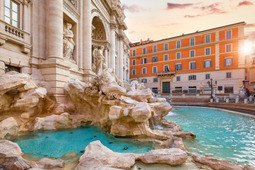
Rome belongs on every Italy itinerary. The Colosseum, the Roman Forum, the Pantheon, the Vatican. These are not tourist traps, they are the most significant ancient and Renaissance sites accessible to visitors anywhere in the world. The Pantheon alone, built in 125 AD with a dome that remained the world's largest for 1,300 years, is worth a flight to see. Book the Colosseum and Roman Forum together (they share a ticket) at least 2-3 weeks in advance in summer as the skip-the-line difference is really 2 hours of your day. The Borghese Gallery requires advance booking (slots fill fast) but holds one of the most concentrated collections of Baroque sculpture in existence, including Bernini's Apollo and Daphne, which many visitors and critics consider the finest sculpture of the 17th century. Between Rome and Florence, Orvieto (a hilltop town with a cathedral façade that took 300 years to complete) and Assisi (St. Francis's birthplace with basilica frescoes by Giotto) add depth to a central Italy journey without adding crowd levels.
Florence, Tuscany, and the Vatican Museums Booking Reality
Florence is concentrated cultural wealth: the Uffizi Gallery, the Accademia (Michelangelo's David), the Duomo complex, and the city's medieval street grid are all within a 20-minute walking radius. Vatican Museums booking reality: the Vatican Museums, containing the Sistine Chapel, require advance online booking during June-September. Summer visitors who arrive without tickets face 2-3 hour waits in the sun. Book through the official Vatican Museums site, not third-party resellers who charge a premium for the same ticket. For David at the Accademia, booking 2-4 weeks ahead is sufficient; walk-in availability exists on weekday mornings in shoulder season. Tuscany beyond Florence rewards those who rent a car: the Val d'Orcia (Pienza, Montalcino, Montepulciano) is the archetypal rolling Tuscan landscape that looks like a Renaissance painting because Renaissance painters painted it from life. The Chianti wine region between Florence and Siena is two hours of the most photogenic driving in Europe.
The Italian Coasts: Amalfi Coast vs. Cinque Terre and the Case for Puglia
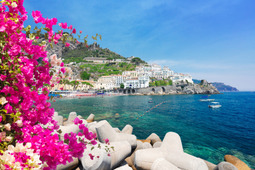
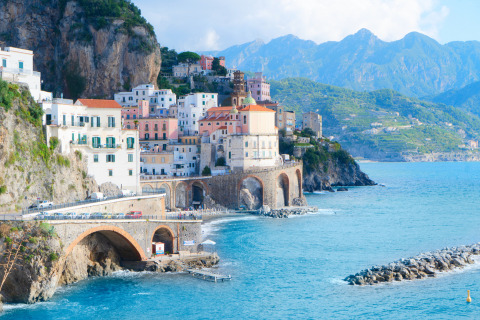
The classic Amalfi Coast vs. Cinque Terre comparison. Both are beautiful; both are overcrowded in summer; the Amalfi Coast is more accessible by car or boat and has longer viable seasons; the Cinque Terre trail between the five villages is frequently partially or entirely closed due to erosion and the villages have become heavily commercialized. For coastal Italy in summer, Puglia in the heel of the boot offers comparable water and coastline (Alberobello's trulli, Polignano a Mare's clifftop town, Otranto's old city) at a fraction of the crowds and prices. Sicily combines beach culture with Greek temples (Agrigento's Valley of the Temples is the best-preserved Greek archaeological site outside Greece), Baroque towns damaged and rebuilt after a 1693 earthquake, and a food culture entirely its own.
Northern Italy: Milan, the Lakes, and Venice
Venice is extraordinary and worth visiting despite the crowds - but the experience is dramatically better outside of June–September (when cruise ships and summer tourists create genuinely unpleasant pedestrian density) and genuinely best in November-February when the city settles into its natural rhythm. One night minimum; two is the right amount. Milan deserves more than its reputation as a transit hub: the Duomo's rooftop (book in advance, €15) provides a view over a cathedral that took 600 years to complete; the Pinacoteca di Brera has one of northern Italy's best painting collections; and the fashion and design culture has produced restaurants and bars that don't appear on most international food rankings but should. The lakes (Como, Maggiore, Garda) provide the best of northern Italian landscape at a manageable scale. A day trip from Milan to Bellagio on Lake Como is one of the most scenically concentrated afternoon trips in Europe.
Italy Travel Tips for Americans: What Changes the Experience
The Italy travel tips for Americans with the highest impact are to book the Vatican, Colosseum, Uffizi, and Accademia months in advance for summer travel. Not weeks in advance, but months. Trains between cities are excellent (Trenitalia and Italo both operate fast trains between Rome, Florence, Venice, and Milan on routes costing €20-€80 depending on timing). Tipping is not expected in Italy - a service charge (coperto) of €1-€3 per person is standard at sit-down restaurants. Italian meal timing: lunch is the most significant meal of the day and runs 1-3pm; dinner doesn't start until 8pm and often later in the south. Ordering at the full meal structure (antipasto, primo, secondo) rather than one dish and leaving produces a completely different dining experience.
Conclusion
The things to do in Italy that define the trip are truly among the most extraordinary experiences available to any traveler on earth, but they require planning that most visitors skip. Open the Vatican Museum’s official website and check availability for your travel dates. If you're going in summer and the slots are empty, that's a warning sign. Build your Italy itinerary with one region outside the Rome-Florence-Venice triangle. Could be the Val d'Orcia, the Amalfi Coast, Puglia, or Sicily as they all add dimensions that the standard circuit doesn't offer. These Italy travel tips for Americans consistently produce the same outcome: the visitors who book in advance and spend time in a less-visited region have a better trip than those who replicate the standard itinerary without any curation.
Useful Links
Vatican Museums - Official Ticket Booking - https://www.museivaticani.va/content/museivaticani/en/organizza-la-tua-visita/biglietti.html
Trenitalia - Italy Train Booking - https://www.trenitalia.com/en.html
Italian National Tourist Board - Visit Italy - https://www.italia.it/en
Related posts