Top Things to See and Do in Rome: Three Days, Three Layers, One City
Rome works best when you organize it by era rather than by map. Ancient sites, Renaissance masterpieces, and living neighborhoods each deserve dedicated time. Here's how to structure all three.
Rome is older than the concept of a tourist. People have been traveling to see it since before the Roman Empire fell. Pilgrims, scholars, artists, and eventually the modern traveler standing in front of the Colosseum trying to process 2,000 years of history while a tour guide speaks into a microphone somewhere nearby. The things to do in Rome are among the most extraordinary experiences available to any visitor on earth. They're also dense, logistically demanding, and much improved by understanding that Rome has three distinct layers; ancient, Renaissance/Baroque, and living city. Each of these rewards dedicated attention rather than being compressed into a single day's sprint between sites. This guide is structured around that framework: a day for each layer, with honest guidance on what each contains and what to prioritize.
Layer One: Ancient Rome
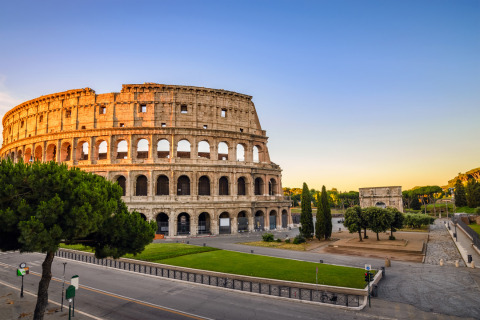
The Colosseum, the Roman Forum, and the Palatine Hill share a single combined ticket ($18-$22 USD, advance booking essential in summer) and represent the most concentrated ancient site accessible to visitors anywhere in the world. The Colosseum is extraordinary - understanding its engineering (80 arched entrances that could empty 50,000 spectators in minutes, a retractable awning called the velarium, an underground hypogeum where animals and gladiators waited below the arena floor) makes it more remarkable than it already appears. The Forum is the civic heart of Republican and Imperial Rome: the Sacred Way, the Temple of Saturn, the Arch of Titus. Most visitors walk through it quickly. It deserves 90 minutes of slow attention. The Palatine Hill is where Rome was founded (tradition places Romulus's hut here) and where the emperors built their palaces. It's included in the combined ticket and almost always less crowded than the Forum. The Pantheon, built in 125 AD, is free on the first Sunday of the month; otherwise €5 with advance booking required. It is arguably the most extraordinary single building still standing from the ancient world.
Layer Two: The Vatican and Rome's Baroque Masterpieces
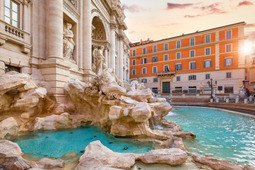
Vatican City visit tips start with one fact: book the Vatican Museums online, in advance, from the official Vatican Museums website, never from third-party resellers who charge a premium for the same ticket. In summer (June-August), book 3-4 weeks ahead; shoulder season, 1-2 weeks. The museum route concludes in the Sistine Chapel, which rewards looking up slowly rather than photographing. St. Peter's Basilica is free and doesn't require the museum ticket, it's a separate entrance. The Borghese Gallery requires advance booking (strictly timed 2 hour entry) and holds what many art historians consider the finest private collection of Baroque sculpture in existence: Bernini's Apollo and Daphne, his Pluto and Persephone, Canova's Pauline Bonaparte. For Baroque Rome in the streets: the Piazza Navona (Bernini's Fountain of the Four Rivers), the Spanish Steps, and the Trevi Fountain are the classic circuit. Visit the Trevi at 7am before the crowds arrive and it's absolutely magical.
Layer Three: Rome's Living Neighborhoods
The best neighborhoods in Rome for experiencing the city as a living place rather than an outdoor museum are south of the centro storico. Trastevere, on the west bank of the Tiber, is Rome's most characterful neighborhood: cobblestone streets, ivy-covered buildings, the 4th century Basilica di Santa Maria, and restaurants and bars that cater to the Roman students and professionals who live there alongside tourists. Campo de' Fiori is a daily flower and produce market in the morning and a piazza full of outdoor bars in the evening, it's one of the most social outdoor spaces in the city. Testaccio, just south of the Aventine Hill, is Rome's former slaughterhouse district, now home to the Testaccio Market (the best fresh produce and food market in the city) and a cluster of restaurants serving the Roman offal-based cooking (cacio e pepe, coda alla vaccinara, rigatoni con pajata) that is the city's genuine culinary heritage.
Rome Food Guide: What Romans Actually Eat
A Rome food guide that starts with pizza is missing the point. Rome is a pasta city first. Cacio e pepe (pecorino, black pepper, pasta), carbonara (eggs, guanciale, pecorino - not cream, never cream), amatriciana (guanciale, tomato, pecorino), and gricia (guanciale, pecorino, no tomato) are the four Roman pasta dishes. Each has a dozen excellent versions in the Testaccio and Trastevere neighborhoods. Supplì (fried rice balls with tomato and mozzarella) and pizza al taglio (rectangular slices by weight) are the street food forms worth knowing. Giolitti near the Pantheon has been making gelato since 1900. One scoop at the window is $3 and among the best in the city. For a sit-down dinner, any trattoria that doesn't have a menu with photographs and a multilingual translation is almost certainly better than one that does.
Planning Your Rome Trip: The 3-Day Framework
Day 1 (Ancient Rome) - Colosseum and Forum in the morning (booked in advance), Palatine Hill after lunch, Pantheon in late afternoon with the golden light coming through the oculus. Day 2 (Vatican and Baroque) - Vatican Museums and Sistine Chapel in the morning (booked in advance), St. Peter's after, Borghese Gallery in the afternoon (again, booked in advance), Trevi Fountain at dusk. Day 3 (Living city) - Testaccio Market in the morning, Campo de' Fiori at lunch, Trastevere afternoon into evening. That structure covers the essential Rome without a single day of aimless walking between sites.
Conclusion
The things to do in Rome that produce the strongest experience are layered across 2,000 years, and the visitors who organize their days around one era at a time rather than jumping between ancient and modern consistently report a more coherent and satisfying trip. Open the Vatican Museums website and pre-book your entry. This is the single most important advance planning step in a Rome visit. Look up the Rome food guide for the four Roman pasta dishes and identify one trattoria in Testaccio or Trastevere for dinner. Finally, if you build your Rome itinerary using the framework above, you're guaranteed a trip to remember. Don't forget, advance bookings are the non negotiable foundation.
Useful Links
- Colosseum - Official Ticket Booking - https://www.colosseo.it/en/
- Pantheon Rome - Official Ticket Info - https://www.pantheonroma.com/en/
- Vatican Museums - Official Booking - https://www.museivaticani.va/content/museivaticani/en/organizza-la-tua-visita/biglietti.html
Related posts