Top Things to See and Do in Japan
Japan is one of the most rewarding countries in the world for travelers, as long as you know which cities to prioritize and what the Japan Rail Pass actually covers. Here's everything you need to know.
What makes Japan different from anywhere else an American traveler is likely to visit isn't the temples or the technology, it's the attention to detail. The ramen shop that has been refining one broth for 40 years. The ryokan innkeeper who spent 20 minutes learning your room numbers to greet you at breakfast. The shinkansen that arrives within 30 seconds of its scheduled time and apologizes publicly if it doesn't. The things to do in Japan are extraordinary, but the extraordinary part isn't the to-do list, it's the quality of execution that surrounds almost every experience. This guide is for American travelers on a first or second Japan trip who want to understand the country's structure before they arrive, choose the right cities for their available time, and navigate the practical realities (JR Pass, transportation, language) without unnecessary friction.
Tokyo: Where to Start and Where to Go Deeper
Among the best places to visit in Japan for first-time visitors, Tokyo is the logical starting point. A city of 14 million people that somehow functions with less visible disorder than a midsize American city. The compulsory experiences are so worth doing: Shibuya Crossing at rush hour (the world's busiest pedestrian intersection), the view from the free Tokyo Metropolitan Government Building observation deck (not the expensive Tokyo Skytree), the Tsukiji Outer Market for the world's most concentrated early-morning seafood eating. But Tokyo's depth is in its neighborhoods. Yanaka is a pre-earthquake district with traditional shotengai (shopping streets), craft shops, and a cat-populated cemetery that has survived multiple urban renewal pressures. Shimokitazawa is Japan's equivalent of Brooklyn circa 2005: vintage clothing, jazz bars, small live music venues, and curry restaurants in a neighborhood not yet discovered by tour buses. Akihabara earns its reputation as electronics and anime territory; Harajuku however deserves less time than guidebooks give it since it has become largely commercial.
Kyoto and Nara: Ancient Japan in Working Form
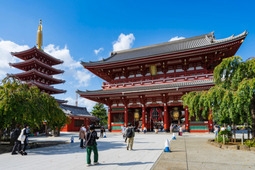
Kyoto is not a museum. It's a functioning city of 1.5 million people where 2,000 temples and shrines coexist with convenience stores, universities, and rush-hour commutes. The best places to visit in Japan for concentrated traditional culture are Kyoto's outer districts: Fushimi Inari (the thousands of vermilion torii gates climbing Mount Inari (free, accessible 24 hours, best at 5am before the crowds), Arashiyama's bamboo grove (same caveat, dawn is the right time), and the preserved merchant district of Gion where maiko and geiko apprentices still move through the streets in the evenings. Nara, 45 minutes from Kyoto by train, has 1,200 wild deer who roam freely through the town and bow when fed. It sounds gimmicky, but it isn't. Nara also contains Tōdai-ji. This is the world's largest wooden building, housing a 49-foot bronze Buddha - and the combination makes it a full half-day that justifies the train fare.
Osaka, Hiroshima, and Miyajima: The Underrated Core
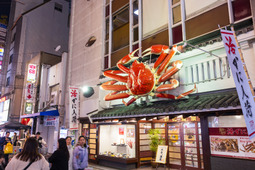
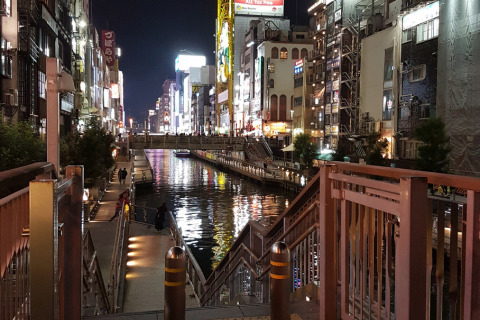
Osaka is Japan's food capital, and its street food culture staples such as takoyaki (octopus balls), okonomiyaki (savory pancake), kushikatsu (fried skewers) are available at every price point and on virtually every street. Dotonbori, the entertainment district centered on a neon-lit canal, is overwhelming but worth your whole evening. Osaka Castle is well-preserved and its hilltop grounds provide a rare green perspective over an otherwise dense city. Hiroshima and Miyajima together make a day trip that no American traveler should skip. The Peace Memorial Museum in Hiroshima is one of the most important museums in the world for understanding the consequences of nuclear weapons. The presentation is measured, the content is devastating, and it requires about two hours of serious attention. Miyajima Island, 30 minutes by ferry from Hiroshima, has a floating torii gate rising from the sea at high tide that is Japan's most photographed image for good reason.
Japan Travel Tips for Americans: Practical Realities
Japan travel tips for Americans cover several practical points that surprise first-timers. Cash is still widely used for example. Carry yen and get it from 7-Eleven ATMs (the most reliable for foreign cards) rather than bank branches. The IC card (Suica or Pasmo) works on virtually every train, subway, and bus in Japan and can be loaded via app or at station machines - it's simpler than paper tickets for everyday transit. Tap water is safe throughout Japan. The language barrier is less severe than anticipated: major train stations have English signage, Google Translate's camera function handles Japanese text in real time, and the level of effort most Japanese service staff make for foreign visitors is above and beyond.
Planning Your Japan Trip: Itinerary and Rail Pass
A Japan itinerary of 2 weeks is the sweet spot. 5 nights in Tokyo, overnight or day train to Kyoto (4 nights), day trip to Nara, day trip to Osaka, Shinkansen to Hiroshima with Miyajima (2 nights), return to Tokyo. To calculate whether the Japan Rail Pass is worth it: a Tokyo to Kyoto to Hiroshima and back to Tokyo round trip by Shinkansen costs approximately ¥44,000 ($290 USD) point-to-point; a 7-day JR Pass costs ¥50,000 ($330 USD). For that itinerary the pass is borderline, add one trip to Nara and it clears the threshold.
Conclusion
There are so many extraordinary things to do and see in Japan, but what makes them so extraordinary is the quality of execution, and that quality is consistent enough across the country that your best Japan experiences are likely ones you find completely by accident. You should decide whether a 7 or 14 day trip makes sense for your timeline and look at the JR Pass calculation above to see whether the pass clears the threshold for your specific itinerary. Check Japan's current entry requirements too, Japan reintroduced a tourist visa program that varies by nationality. These Japan travel tips for Americans consistently land on the same conclusion: go for at least 10 days, use an IC card for daily transit, carry cash, and give Kyoto's quieter temples as much time as you do Dotonbori’s neon streets.
Useful Links
Hiroshima Peace Memorial Museum - https://hpmmuseum.jp/modules/lang/
Japan Rail Pass - Official Pricing - https://www.japanrailpass.net/en/
Japan National Tourism Organization - https://www.japan.travel/en/us/
Related posts