Top Things to See and Do in Tokyo: A Neighborhood-by-Neighborhood Guide
Tokyo is the world's 3rd largest city, and its best experiences are neighborhood-level. Here's where to go, what to eat, and how to navigate 14 million people without losing your mind.
How do you organize a week in a city of 14 million people with 200+ Michelin-starred restaurants, 50-year-old ramen shops, 24-hour convenience stores with better food than most American restaurants, and a train system so efficient it apologizes when a train arrives 25 seconds late? The things to do in Tokyo are not the problem - the problem is choosing. This guide prioritizes by neighborhood, then by specific experience within each, so visitors with 4-7 days can build a coherent picture of the city rather than ricocheting between famous landmarks. It's organized for first-timers who want a framework, and for returning visitors who did the standard circuit and want to find what they missed.
East Tokyo: Asakusa, Ueno, and Akihabara
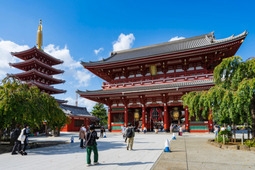
A Tokyo neighborhoods guide for East Tokyo starts in Asakusa, the city's oldest district and the most intact surviving piece of pre-war Tokyo. Senso-ji temple is Tokyo's oldest and most visited - the approach through Nakamise-dori shopping street is crowded in the afternoon and serene at 6am when shopkeepers are setting up. The surrounding streets (Denpoin Street, the back lanes east of the temple) have craft shops, street food vendors, and rickshaw tours that give the most traditional-Tokyo experience accessible within the city. Ueno Park contains Tokyo National Museum (the largest in Japan, with the world's most comprehensive collection of Japanese art), the zoo, and Shinobazu Pond. It's the city's most layered park for a half-day visit. Akihabara earns its electronic/anime district reputation: multi-floor electronics shops, figure stores, and maid cafes are all exactly what you've heard, and they can be a one-of-a-kind experience even for visitors who aren't anime fans.
West and South Tokyo: Shibuya, Shinjuku, Shimokitazawa
The Tokyo neighborhoods guide for the city's west side covers the areas most visitors already know, Shibuya and Shinjuku. Shibuya Crossing is the world's most famous pedestrian scramble: stand at the corner of Hachiko Square and watch 3,000 people cross from six directions simultaneously. The Hachiko statue (the loyal Akita who waited for his deceased owner for nine years) is directly outside Shibuya Station's main exit. Shibuya Sky observation deck ($18) has the best elevated Shibuya view. Shinjuku's east side has Golden Gai, a cluster of 200 tiny bars in six lanes, each seating 6-10 people, which is the most compressed and peculiar drinking experience in a city chock full of them. Shimokitazawa, 10 minutes from Shibuya by Odakyu Line, is the neighborhood the standard circuit misses: vintage clothing, jazz bars, live music venues, and curry shops in a low-rise residential neighborhood that still feels like Tokyo rather than a tourist destination.
Food: The Tokyo Food Guide That Starts Honestly
A Tokyo food guide that opens with omakase sushi restaurants requiring months-ahead reservations misses where most visitors should actually eat. The best starting point is actually Japan's convenience stores (7-Eleven, FamilyMart, Lawson) as they sell excellent food - onigiri (rice balls), sandwiches, hot foods, and desserts at $2-$6 per item that outperform most American fast casual options. This is not a consolation prize; it's a genuine part of Tokyo food culture. For ramen, Ichiran (solo dining booths, tonkotsu broth, customizable) and Fuunji (tsukemen dipping ramen in Shinjuku) represent two ends of the ramen spectrum. For sushi at a realistic price point, Sushiro and Kura Sushi conveyor belt chains serve 20+ pieces of fresh sushi for $15-$25. The quality is excellent and the experience is entirely Japanese. Depachika, the basement food halls of department stores (Isetan in Shinjuku, Mitsukoshi in Ginza), are among the world's best food shopping environments: prepared dishes, pastries, wagashi (traditional sweets), and the most elaborate packaging of any food retail in the world.
Free Things to Do in Tokyo and The View Budget
Free things to do in Tokyo start with the city's best observation perspective. The Tokyo Metropolitan Government Building in Shinjuku has two free observation decks (North and South towers, alternating closures) at 202 meters with unobstructed views of the city and, on clear days, Mount Fuji. The Tokyo Skytree charges $25-$40 for a comparable view from a different direction. Yoyogi Park adjacent to Harajuku station is Tokyo's most convivial public space on weekends. Musicians, picnickers, and sports clubs occupy one of the city's few open green areas. Hamarikyu Gardens ($3, near Tsukiji) is a former feudal lord's garden with a traditional teahouse on a tidal pond in the middle of a skyline, it's worth one hour and $3. The Yanaka neighborhood is free to walk, has Tokyo's most intact traditional shotengai, and the Yanaka Cemetery is one of the city's most atmospheric free spaces.
Tokyo Travel Tips: Practical Navigation
Tokyo travel tips for first-timers begin with the Suica card, which can now be added to Apple Wallet and Google Pay before leaving the United States. Load it, tap your phone at turnstiles, and you're done. The city's train system looks intimidating on a map; in practice, every station has English signage and the apps (Google Maps, Hyperdia) route you accurately. The average train fare is ¥200-¥400 ($1.30-$2.60) per journey. The city is generally very safe. Violent crime rates are among the lowest of any major city in the world, and solo travelers (including women traveling alone) report a consistently high comfort level. Best times to go would be spring (late March-early April) for cherry blossom season; late November for fall foliage; avoid August (90°F+ with extreme humidity). Five to six days is a solid Tokyo trip; seven days allows a day trip to Nikko or Kamakura.
Conclusion
The things to do in Tokyo that visitors describe afterward are almost always neighborhood-level discoveries. The tiny bar in Golden Gai, the conveyor belt sushi restaurant with a 20-minute wait and extraordinary fish, the morning at Senso-ji before the tour buses arrive. Look up Shimokitazawa on a map and note its position relative to Shibuya, it's 10 minutes away and most visitors never even go. Make sure to set up Suica on your phone's wallet app before departure. It's available from any iPhone or Android and removes all transit friction on day one. These Tokyo travel tips consistently produce the same outcome: the visitors who use the neighborhood framework and carry Suica come home talking about Tokyo as one of the best cities they've ever visited.
Useful Links
- Tokyo Metropolitan Police - Crime Statistics - https://www.keishicho.metro.tokyo.lg.jp/multilingual/english/
- Suica - Apple Wallet Setup - https://suica.jreast.co.jp/en/applewallet/
- Tokyo Tourism - Official Guide - https://www.gotokyo.org/en/
Related posts