Top Things to See and Do in Mexico - Beyond Cancún
Mexico is one of the world's most diverse countries - and Cancún is just the smallest slice of it. Here's what Mexico City, Oaxaca, the Yucatán, and the colonial heartland actually offer.
Many people have been to Mexico - or so they think. What they've really been to is a resort corridor that could exist in any tropical country, with swim-up bars and all-inclusive pricing and very little that is distinctly Mexican. The things to do in Mexico that make it one of the world's truly great destinations are everywhere except that corridor. In Mexico City's 160 museums and the taco stands that compete with anything in the world's great food cities; in Oaxaca's markets where mole negro has been made from the same recipe for generations; in the Yucatán Peninsula's cenotes (freshwater sinkholes used by the Maya as sacred sites) where you can swim in turquoise water 40 feet underground. This guide is for people who've been to Cancún and want to know what else exists, and for first-timers who want to approach Mexico at its actual scale.
Mexico City - The World-Class Capital Most Americans Skip
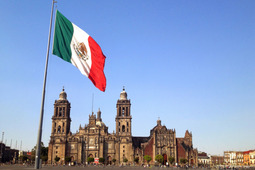
A Mexico City travel guide starts with reframing. Mexico City (CDMX) is one of the world's great urban experiences - a city of 22 million people with more museums than any city except Washington D.C., a food scene that has produced more internationally recognized chefs than any other Latin American city, and neighborhoods (Roma, Condesa, Coyoacán) that are safe, walkable, and layered with architecture spanning Aztec foundations, Spanish colonial overlays, and mid-century modernist buildings. The Museo Nacional de Antropología in Chapultepec Park is the finest pre-Columbian archaeology museum in the world - the Aztec Sun Stone (incorrectly called the Aztec Calendar) alone is worth the flight. Frida Kahlo's Casa Azul in Coyoacán draws significant queues but is worth booking in advance. The Templo Mayor, excavated beneath the Zócalo, shows the Aztec capital that was buried under the Spanish city that was built directly on top of it.
Oaxaca and the Colonial Heartland
Oaxaca Mexico travel consistently outperforms its reputation, which is already high. The state capital - Oaxaca de Juárez - is a city of 300,000 with a food culture that multiple publications have ranked as the best in the Americas. Tlayudas (large crispy flatbreads with beans, meat, and cheese), mole negro (the most complex of Oaxaca's seven moles, made from chilhuacle negro, chocolate, and 30+ ingredients), and mezcal distilleries in the surrounding valleys make eating and drinking in Oaxaca a dedicated pursuit rather than incidental tourism. The Saturday Tlacolula market (45 minutes from Oaxaca city) is one of the oldest continuously operating indigenous markets in the Americas. San Cristóbal de las Casas in Chiapas, Guanajuato in the Bajío highlands, and Mérida in the Yucatán each represent equally compelling colonial city experiences for travelers who want to understand Mexico beyond its coasts.
The Yucatán Peninsula - Ruins, Cenotes, and Coastal Alternatives
Yucatan Peninsula travel for Americans typically begins and ends with Chichen Itza - justifiably one of the most impressive archaeological sites in the Americas, but also its busiest. Uxmal, 50 miles south of Mérida, has comparable architectural complexity and a fraction of the crowd. The Ruta Puuc connects five Mayan sites in a single day drive through the low jungle. Tulum has an extraordinary coastal setting - ruins on a cliff overlooking the Caribbean - though the adjacent town has become heavily developed. The cenotes of the Yucatán are the experience most visitors underallocate time for, with hundreds of freshwater sinkholes, some open-air and some in cave systems, where the Maya performed rituals and where modern visitors can swim in water of surreal clarity. Holbox Island (north of the Yucatán Peninsula, car-free, accessible by ferry) and Isla Mujeres (30 minutes from Cancún by ferry) offer Caribbean beach experiences that are quieter, cheaper, and more Mexican than the Cancún hotel zone.
Pacific Coast and Baja - Mexico's Other Coastline
Pacific coast Mexico - specifically Puerto Vallarta, the Oaxacan coast (Mazunte, Puerto Escondido, Zipolite), and Los Cabos in Baja California - offers beach experiences with stronger Mexican cultural identity than the Caribbean coast. Puerto Escondido's Zicatela Beach is one of the world's premier surfing destinations. The Oaxacan coast combines the food and cultural depth of the inland Oaxaca city with beach access - the ceviche and pescado al ajillo (fish in garlic) at palapa restaurants a few steps from the Pacific is one of Mexico's most unrepeatable eating experiences. Baja California's Ensenada wine region (Valle de Guadalupe) has developed into a legitimate wine destination over the past decade - a 90-minute drive from San Diego with 100+ wineries and a food scene that has drawn Mexico City chefs to open wine-country restaurants.
Mexico Travel Tips for Americans - What Changes the Experience
US citizens don't need a visa for Mexico - a tourist card (FMM) costing approximately $35 is issued at entry. The Mexican peso offers strong value for Americans - $1 USD equals approximately 16-18 MXN, making street food, local transport, and non-luxury accommodation extremely affordable. In terms of safety, Mexico is large and its safety profile varies dramatically by region. The US State Department publishes travel advisories by Mexican state - checking the specific state you're visiting rather than treating Mexico as a single entity is the right approach. CDMX, Oaxaca, the Yucatán, and the Pacific coast destinations mentioned here all fall in the manageable range for experienced travelers with standard precautions. Nonstop flights to Mexico City, Cancún, and Guadalajara from most U.S. hubs are available; the Mexico City airport (NAICM, officially Aeropuerto Internacional Felipe Ángeles) connects to internal flights for Oaxaca and Mérida at $60-$120 USD each way.
Conclusion
The things to do in Mexico that most Americans never experience are accessible, affordable, and often better than the equivalent European destination at a fraction of the price and the flight time. Look up direct flights from your nearest hub to Mexico City and compare the price to a European capital - CDMX is often significantly cheaper and takes 3-5 hours less. Also, be sure to research the U.S. State Department travel advisory for the specific Mexican states in your itinerary - not the national overview, the state-level pages. Mexico rewards the traveler who goes beyond the resort, and almost nothing outside the resort costs what an all-inclusive will charge you per day.
Useful Links
Mexico City Tourism - Official Guide - https://turismo.cdmx.gob.mx/en
Mexico Immigration Institute - Tourist Card (FMM) - https://www.inm.gob.mx
U.S. State Department - Mexico Travel Advisory - https://travel.state.gov/content/travel/en/international-travel/International-Travel-Country-Information-Pages/Mexico.html